
Cat Cat Village Sapa: What to Expect, and an Honest Review

Updated: Jul 27
Cat Cat Village is one of the easiest traditional villages to visit from Sapa. Located around two to three kilometers from the town center, it combines mountain scenery, terraced fields, Black Hmong culture, and a walking route leading toward waterfalls and large wooden water wheels.
It is also one of Sapa's most commercialized attractions.

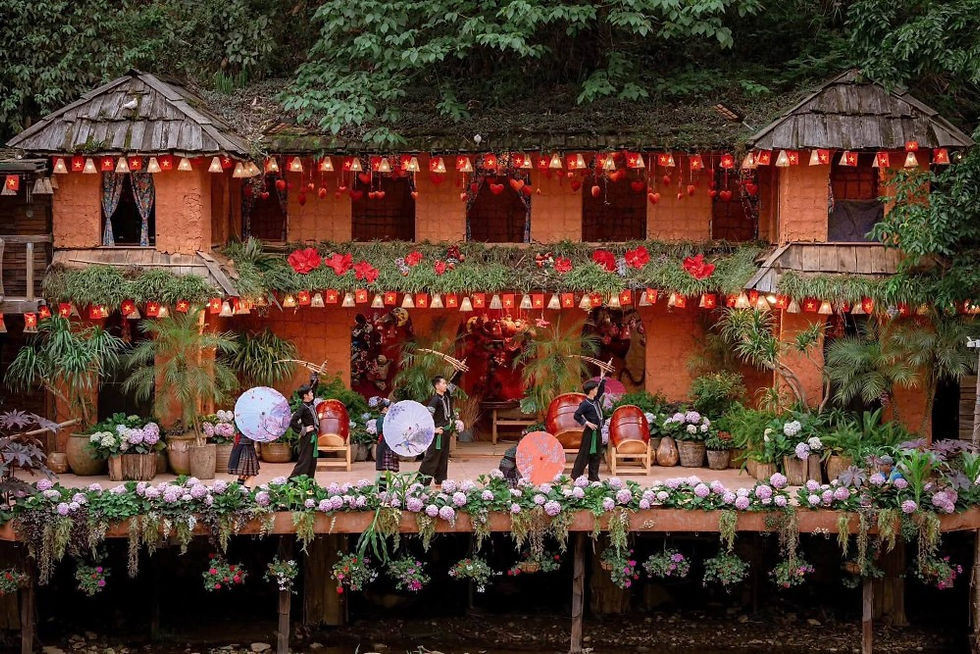
That does not automatically make it a bad place to visit, but it does mean you should arrive with the right expectations. Cat Cat is no longer an isolated mountain settlement. It is a developed visitor attraction with ticket gates, souvenir stalls, costume rentals, cultural performances, and purpose-built photography areas.
For first-time visitors with limited time in Sapa, it can still be a convenient and enjoyable half-day trip.
Why Visit Cat Cat Village?
The main advantage is accessibility. You do not need to arrange a full-day trekking tour or travel far outside Sapa. From most central hotels, the entrance is a short taxi ride or a 30-45 minute walk.
Inside, the route passes wooden houses, textile workshops, food stalls, and shops selling clothing and handicrafts. It then descends toward Tien Sa Waterfall, commonly called Cat Cat Waterfall, where bridges and water wheels stand beside the stream.
The surrounding mountains and terraces can be attractive in clear weather. However, the experience is more structured than a trek through villages such as Lao Chai or Ta Van. Think of Cat Cat as an accessible cultural and scenic attraction rather than untouched rural life.

How to Get to Cat Cat Village from Sapa
Walking
The walk from central Sapa normally takes 30-45 minutes. The road toward the entrance is largely downhill and offers views across the surrounding slopes.
Remember that the return journey is uphill.
After several hours inside the village, the climb back to Sapa may feel harder than expected. Many visitors walk down and return by taxi or motorbike taxi.
Taxi
A taxi is the simplest option for families and small groups. Agree on the fare before leaving, especially when arranging the ride directly rather than through a hotel or app.
Motorbike or Motorbike Taxi
Motorbike taxis are widely available. Visitors renting their own motorbike must park outside the main walking route.
Only ride independently when you have the correct license, appropriate insurance, and experience on steep roads. Renting a motorbike does not automatically make the ride legal.
Tickets and Opening Hours
The adult ticket is commonly listed at 150,000 VND.
The ticket covers the main walking areas, waterfalls, bridges, and cultural attractions. Food, costume rental, transport, and personal purchases cost extra.
Traditional or ethnic-inspired clothing is widely available to rent. Prices depend on the design and accessories included.
Remember that many outfits are created for tourism and should not be presented as a complete or authoritative representation of Hmong clothing traditions.

What to See Inside Cat Cat Village
Hmong Textile Work
Workshops demonstrate hemp preparation, weaving, embroidery, and indigo dyeing. Some are primarily designed for visitors, but they can still provide a useful introduction to regional textile techniques.
Ask before photographing artisans and residents.
Tien Sa Waterfall
Tien Sa Waterfall is near the lower central section of the village. The waterfall, stream, wooden bridges, and water wheels form the busiest part of the route.
Arrive early for fewer crowds. Stone paths can become slippery after rain, so proper shoes are more useful than sandals.
Water Wheels and Bridges
The water wheels are among Cat Cat's most recognizable images. The area is carefully arranged for visitors rather than being an untouched agricultural site, but it remains one of the most scenic parts of the walk.
Cultural Performances
Traditional music and dance performances may be held in the central area. Schedules can change, so check at the ticket counter rather than planning the visit around an old online timetable.
Food and Souvenirs
Small stalls sell grilled corn, bamboo rice, meat skewers, sticky rice, and drinks. Souvenir shops offer embroidered bags, scarves, jewelry, and decorative textiles.
Some products are locally made, while others may be mass-produced. Ask where an item was produced if authenticity matters to you.

Is Cat Cat Authentic or Too Touristy?
The honest answer is that it is both a living Hmong community and a heavily developed visitor attraction.
Traditional crafts, local families, and elements of Hmong culture remain present. At the same time, the main route contains costume rentals, souvenir shops, artificial photography sets, and organized entertainment.
Visitors expecting an isolated mountain village may be disappointed. Cat Cat does not provide the same experience as a longer trek through the Muong Hoa Valley or an overnight homestay.
However, not every traveler has the time or physical ability for a full-day trek. Cat Cat provides a simple introduction to Sapa's scenery and culture without complicated planning.
The Best Time to Visit
Go early, ideally before 9AM. Temperatures are cooler, paths are quieter, and the light is generally better for photography.
Weekdays are usually less crowded than weekends and Vietnamese public holidays.
Spring brings flowers and moderate temperatures. Summer is green but wetter. September and early October can coincide with golden rice in the wider Sapa region. Winter is colder and often foggy.
Short-term weather matters more than the month. A clear weekday morning is usually better than a rainy day during the supposed peak season.
What to Wear and Bring
Wear comfortable walking shoes with non-slip soles. Bring a light rain jacket, water, sunscreen, a warm layer outside summer, insect repellent, and cash for small purchases.
Mobile payments are common in Vietnam, but international visitors may not be able to use every local payment system.
Visiting Respectfully
Cat Cat is not only an attraction. People live and work there.
Ask permission before taking close photographs, particularly of children. Do not enter houses or private areas unless invited. Avoid handing out money or sweets to children.
A better way to contribute is to buy food or genuinely handmade products from local businesses while remaining aware that not every souvenir is locally produced.
Is Cat Cat Village Worth Visiting?
Cat Cat is worth considering when this is your first trip to Sapa, you have only half a day, or you want an accessible introduction to the region.
It is also reasonable for travelers who do not want a full trekking route.
Lower its priority if your main goal is a quiet and authentic village experience. A guided trek through Lao Chai and Ta Van or an overnight homestay will probably suit you better.
Cat Cat's weakness is overdevelopment. Its strength is convenience. Whether it is worth the ticket depends on which matters more to you.
Ready to go? See our practical tips & itinerary.
See the Sapa Mountains from Above
Cat Cat shows you the mountains from the ground. A tandem paragliding flight provides a wider view of the Sapa landscape.
Because Cat Cat works well as a morning excursion, it can be combined with an afternoon flight when weather conditions allow.
Ready to see Sapa from above? Check current flying conditions and book a tandem paragliding experience with Fly Sapa - Vietnam's highest take-off.


Comments