
Đồi Bò, Sapa: A Practical Guide to Hiking, Cloud Hunting, and Camping

High above the mountains west of Sapa, Đồi Bò is a quiet grass-covered ridge with wide views towards Ô Quy Hồ Pass and the Hoàng Liên Sơn range.
Unlike Sapa’s major attractions, Đồi Bò is still relatively undeveloped. There are no cable cars, paved viewpoints, or busy tourist facilities waiting at the top. Reaching it means hiking along natural trails through pine forest and open grassland.
That makes it particularly appealing if you want a quieter outdoor experience: an early-morning cloud hunt, a half-day hike, sunset photography, or an overnight camping trip.
Here is what to know before visiting Đồi Bò, including how to get there, when to go, and what to bring.

Where Is Đồi Bò in Sapa?
Đồi Bò is located in the wider Tả Phìn area, close to the Ô Quy Hồ side of Sapa and around 12 km west of the town center.
The journey normally involves two stages.
First, travel from central Sapa towards Ô Quy Hồ Pass in the direction of Lai Châu. The initial road section is approximately 8 km and usually takes around 15–20 minutes by motorbike or car.
From the lower trail area, the rest of the journey is on foot.
The hike to the ridge generally takes around 1.5–2 hours, depending on your route and pace. Different paths can make the total hiking distance roughly 5–8 km.
The trail passes through pine forest before opening onto rolling grassland and the exposed upper ridge.

Should You Go with a Guide?
This is worth considering if it is your first visit.
The route is made up largely of natural paths rather than a formal marked hiking trail. Junctions can be unclear, and there may be little or no signage in some sections.
If you do not know the area, travelling with someone familiar with the route or hiring a local guide can make navigation much easier, particularly when visibility is poor.
When Is the Best Time to Visit Đồi Bò?
November to March is generally the most comfortable period for exploring Đồi Bò.
These months are usually cooler and drier than the summer rainy season, which makes the natural trails easier to walk. Cool mornings can also create the low clouds and valley fog that visitors hope to see from higher viewpoints.
November and December
Late autumn and early winter bring cooler conditions and drier-looking grass in some areas.
This is also the period when cattle may be seen grazing higher on the hills, one of the features associated locally with the name Đồi Bò - “Cow Hill.”
January to March
Early spring can bring greener grass and seasonal wildflowers across the slopes.
Conditions remain variable, however. Sapa can be cloudy, cold, and misty even during the drier months.
What About the Rainy Season?
Extra caution is sensible between May and October.
Frequent rain can turn dirt paths muddy and slippery, while thick fog may limit visibility across the mountains.
It is still possible to visit during this period, but recent weather conditions matter more than the month alone.

Morning or Sunset?
For cloud hunting, aim to be on the ridge during the early morning, roughly between 6 and 8:30 AM.
This is when low clouds may settle below the surrounding slopes, creating the sea-of-clouds effect Sapa is known for. It is never guaranteed, however, because cloud height, wind, and humidity can change quickly.
For sunset, roughly 3:30–5:30 PM is a good target.
Late-afternoon light can transform the grassland and surrounding mountains, but remember to allow enough time to hike back before darkness unless you are camping overnight.
What Is There to Do at Đồi Bò?
Đồi Bò is less about a particular attraction and more about spending time in the landscape.
Photography and Mountain Views
The open ridge provides broad views across the surrounding mountains and towards the Ô Quy Hồ area.
Grassland, pine forest, and grazing cattle create a very different atmosphere from Sapa’s more developed viewpoints.
On a clear day, you may also see parts of the Hoàng Liên Sơn range and Fansipan in the distance.

Camping
Đồi Bò is also popular with travelers who want to camp overnight.
With little artificial lighting in the surrounding area, clear nights can provide good conditions for stargazing.
Camping also means you can already be on the ridge at sunrise rather than hiking up before dawn.
The trade-off is that you need to be self-sufficient. There are no established tourist services waiting at the top, and temperatures can become significantly colder after sunset.
Hiking
The trail is relatively approachable compared with more demanding treks in the Hoàng Liên Sơn mountains, but it should not be treated as a casual paved walk.
You still need to cover several kilometers of natural trail, sometimes over wet grass, dirt, and uneven ground.
For travellers with basic fitness and suitable footwear, it can work well as a half-day outdoor activity.
Day Trip or Overnight Camping?
Day Trip | Overnight Camping | |
Typical time | Around 3–5 hours | 2 days / 1 night |
Best for | Hiking, photography, cloud hunting, sunset | Sunrise, stars, and a longer outdoor experience |
Main gear | Water, snacks, a light backpack, a phone, or camera | Tent, warm sleeping bag, food, water, and headlamp |
Preparation | Moderate | Considerably higher |
For most first-time visitors, a day hike is the simpler option.
Camping makes more sense if you already have suitable equipment or are traveling with people experienced in the area.
What to Bring
Because Đồi Bò is still relatively undeveloped, you should arrive prepared.
Wear hiking shoes with good grip. Grass and dirt paths can become slippery after rain or heavy morning moisture.
Bring enough drinking water and food for the entire trip rather than relying on finding shops along the trail.
A warm or windproof outer layer is also useful. At around 2,400 meters, exposed sections of the ridge can feel considerably colder than central Sapa, particularly early in the morning, after sunset, or in strong winds.
If you are camping overnight, bring proper shelter, a warm sleeping bag, lighting, and enough food and water for your stay.
Most importantly, carry all rubbish back with you. Undeveloped mountain areas do not have the waste-management infrastructure of established tourist sites.

A One-Day Đồi Bò Itinerary
Đồi Bò can work well as a morning hike combined with another Sapa activity later in the day.
6 AM - Leave central Sapa
Travel towards the lower Ô Quy Hồ area and the start of the hiking route.
6:30–8:30 AM - Hike to Đồi Bò
Follow the trail through pine forest and grassland towards the upper ridge.
8:30–12 PM - Explore and return
Spend time photographing the landscape, watching the clouds, and enjoying the views before hiking back down.
12–1:30 PM - Lunch in Sapa
Return to town for lunch and a break.
Afternoon - See Sapa from the air
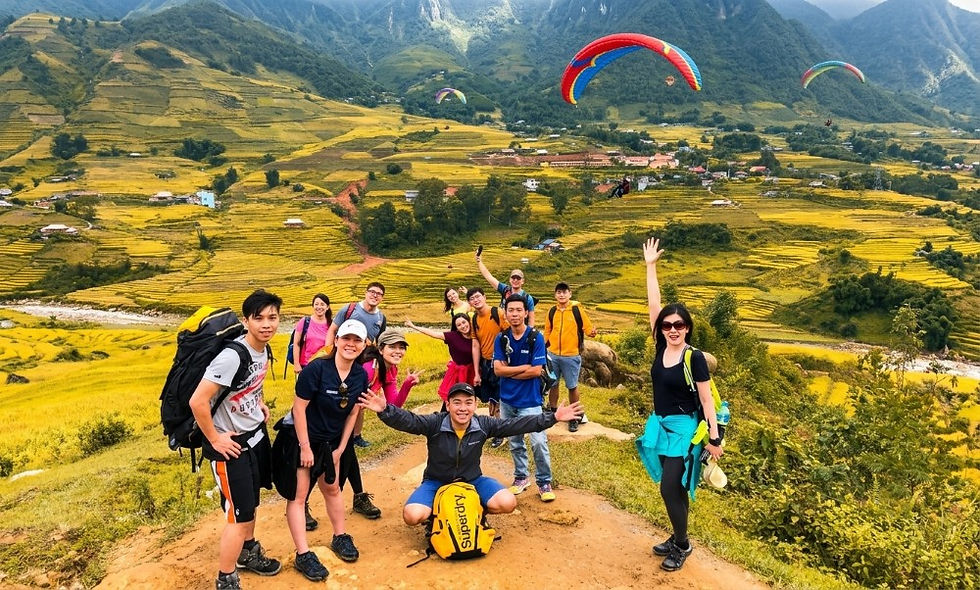
If weather and flying conditions are suitable, you can follow the morning hike with a tandem paragliding flight in Sapa
Fly Sapa flights take off from the Hàm Rồng area and descend towards Tả Van, offering a very different perspective over Muong Hoa Valley and its terraced landscape.

Where to Eat and Stay Afterwards
After the hike, central Sapa has plenty of places for a proper meal, including hotpot, grilled dishes, salmon, and sturgeon.
You can browse Fly Sapa’s guide to restaurants in Sapa for ideas.
If you want to stay closer to the countryside, accommodation around Tả Van or Ô Quy Hồ can be a good choice for an outdoor-focused trip.
Travelers who prefer easier access to restaurants, shops, and transport may find central Sapa more convenient. See our Sapa hotel guide for more options.
Is Đồi Bò Worth Visiting?
Đồi Bò is best suited to travelers who want a simple mountain hike rather than another developed tourist attraction.
There are no major monuments, entertainment complexes, or elaborate facilities. The attraction is the landscape itself: open grassland, pine forest, mountain views, changing clouds, and a much quieter atmosphere than you will find at Sapa’s busiest sights.
Bring proper shoes, check the weather, and leave enough time to enjoy the trail without rushing.
And if you want to see another side of Sapa afterwards, you can book a Fly Sapa tandem paragliding flight and experience Muong Hoa Valley from above.


Comments