
Muong Hoa Valley Sapa - A Complete Guide to Rice Terraces, Villages & Things to Do

Away from the busy center of Sapa, Muong Hoa Valley stretches through the mountains like a green ribbon beneath the clouds.
The valley passes through villages inhabited by Hmong, Dao, and Giay communities and is best known for its dramatic terraced rice fields, mountain scenery, and the mysterious Sapa Ancient Rock Field.
If you want to explore the valley without overspending and experience more of the local landscape and culture, this guide from Fly Sapa covers what you need to know, updated in August 2026.

Best Time to Visit Muong Hoa Valley
Muong Hoa Valley looks very different depending on the season:
March to May - Spring and early summer: Temperatures are generally mild, around 15–25°C. Wildflowers appear across the mountains, while some rice terraces begin filling with water.
May to June - Water season: Mountain water flows into the terraced fields, turning them into reflective surfaces that mirror the sky and surrounding peaks.
August to September - Rice harvest season: This is one of the most popular times to visit. Large parts of the valley turn golden as the rice approaches harvest.
December to February - Cold and misty season: Temperatures can fall to around 5–15°C, and the valley is often covered by mist and low clouds. This period suits travellers who prefer a quieter, slower trip.

How to Get to Muong Hoa Valley
Muong Hoa Valley stretches for more than 15 km from the area below Sapa through Lao Chai and Ta Van towards Ban Ho.
There are several ways to explore it depending on how much time you have and how active you want to be.
1. Muong Hoa Mountain Train
The Muong Hoa mountain train runs from Sapa Station inside Sun Plaza to Hoang Lien Station near the Fansipan cable-car complex.
Key details:
Route length: Approximately 2 km.
Journey time: Around 6 minutes each way.
Frequency: Roughly every 15–30 minutes.
What you see: Views across Muong Hoa Valley and the Hoang Lien Son mountains from the train’s large windows.
The train is primarily a connection between central Sapa and the Fansipan cable-car area rather than transport through the villages deeper inside Muong Hoa Valley.

2. Motorbike or Car
From central Sapa, the route generally follows:
Fansipan Road → Violet Road → Muong Hoa Road → Provincial Road 152 towards Lao Chai and Ta Van.
The source route notes that the old direction through Cau May Street is now one-way, so drivers should pay attention to current traffic signs.
Provincial Road 152 includes steep bends and can become misty early in the morning or late in the afternoon.
If you rent a motorbike, typical prices are around VND 100,000–150,000 per day, excluding fuel.
Take extra care in rain, fog, or low visibility.

3. Trekking Through the Villages
Trekking is one of the most popular ways to experience Muong Hoa Valley, particularly among international visitors.
A common route runs from Sapa through Y Linh Ho – Lao Chai – Ta Van.
Walking through the valley gives you more time to see the rice terraces, villages, and everyday life than traveling entirely by road.

Best Things to Do in Muong Hoa Valley
1. See the Terraced Rice Fields
Muong Hoa’s rice terraces are the valley’s defining landscape.
Built into the mountain slopes over generations, they reflect traditional farming methods used by communities including the Hmong, Dao, and Giay.
Walking through the terraces is one of the best ways to appreciate the scale of the landscape.
Tip: Some of the widest views are available from roadside viewpoints along Provincial Road 152.
Traditional clothing rental is also available in several tourist areas, usually for around VND 50,000–100,000 per outfit.

2. See Muong Hoa Valley From the Air
For a wholly different perspective, you can see the valley during a tandem paragliding flight with Fly Sapa.
From the air, you can look across the terraced fields, the Hoang Lien Son mountains, and the winding valley below.
The landscape is particularly photogenic during:
August–September: golden rice season;
May–June: water season.
Flights are weather-dependent, so booking in advance gives the team more flexibility to advise you about suitable conditions.
GoPro or similar camera equipment can also be used to record the experience.

3. Visit the Sapa Ancient Rock Field
The Sapa Ancient Rock Field covers an area of approximately 8 km² and contains more than 200 carved stones.
The carvings include geometric patterns, human figures, houses, fields, and other symbols whose meanings are still debated.
The site was recognized as a National Historical and Cultural Relic in 1994.
Two of the best-known stones are commonly referred to locally as Da Chong and Da Vo.

4. Visit Muong Hoa Stream and Ta Van’s Cau May Area
Muong Hoa Stream runs for roughly 15 km through the valley and provides water for the surrounding agricultural land.
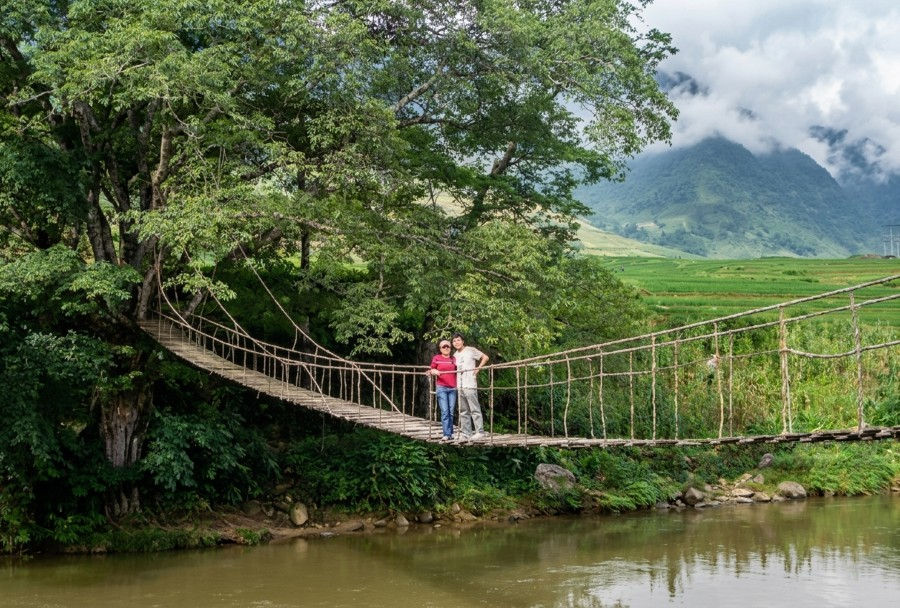
Wooden and traditional-style bridges cross parts of the stream, creating popular stopping points for walkers and photographers.
You can stop by the water for a break or picnic, but take care around wet rocks, particularly during the rainy season.

5. Explore the Villages
Several villages sit along or close to Muong Hoa Valley.
Lao Chai Village is one of the largest Hmong communities in the valley and is known for traditional textile production and indigo dyeing.
Ta Van Village is home to Giay and Red Dao communities and has become one of the valley’s most popular bases for homestays, cooking classes, and traditional herbal baths.
Y Linh Ho and Giang Ta Chai: These areas are popular for trekking and offer quieter mountain scenery, waterfalls, and forest paths.
Ban Ho: Further down the valley, Ban Ho has a more rural atmosphere and lies near the meeting point of Muong Hoa and Vang streams.

6. Stop at a Valley-View Café
Cafés overlooking the rice terraces have become increasingly popular around Muong Hoa Valley.
Two examples mentioned in the original guide are:
Sapana Cafe & Bistro - Y Linh Ho: An open-air café overlooking the rice terraces near the upper part of the valley.
Wecamp Cafe Retreat - Ta Van: Located close to Muong Hoa Stream, with a wooden outdoor area overlooking fields and mountain scenery.

Muong Hoa Valley Costs and Entrance Prices
The following are approximate prices from the original guide and may change depending on season or service provider.
Service | Approximate Price | Notes |
Muong Hoa mountain train | VND 180,000–200,000 return | Tickets available at Sapa Station / Sun Plaza |
Motorbike rental | VND 100,000–150,000/day | Fuel not included |
Traditional clothing rental | VND 50,000–100,000/set | Accessories may be available |
Homestay | VND 250,000–800,000/night | Dormitory or private room |
Red Dao herbal bath | VND 150,000–200,000/session | Price varies by service |
Food | VND 100,000–250,000/person/meal | Depends on restaurant and dishes |
Practical note: Prices can change and may be bundled with Fansipan cable-car packages or local promotions. Check current prices directly with the official ticket office or service provider before traveling.
Suggested Muong Hoa Valley Itineraries
One-Day Muong Hoa Valley Itinerary
Morning: Take the Muong Hoa mountain train for views over the valley. From Hoang Lien Station, continue towards Provincial Road 152 and visit the Sapa Ancient Rock Field.
Lunch: Eat in Ta Van and try local dishes such as grilled river fish, free-range chicken, or bamboo-tube rice.
Afternoon: Walk around Ta Van and Lao Chai, visit the Cau May area and stop at a café before returning to central Sapa.
Two Days, One Night: Trekking, Homestay, and Paragliding
Day 1: Trek Through Muong Hoa Valley and Fly with Fly Sapa
Morning: Start from Sapa and trek through Y Linh Ho – Lao Chai – Ta Van.
The walk usually takes around 3–5 hours, depending on the route and pace.
You will pass rice terraces, mountain paths, and villages along the way.
Lunch: Arrive in Ta Van Village, have lunch, and check into your homestay.
Afternoon: If weather conditions are suitable, take a tandem paragliding flight with Fly Sapa. Pickup can be arranged from your accommodation before traveling to the take-off area at Ham Rong, approximately 1,750 meters above sea level.
Evening: Land near the Ta Van area, return to your homestay, and spend the evening enjoying dinner and the quieter atmosphere of the valley.
Day 2: Explore the Valley and Slow Down
Morning: Wake up in the valley and explore the area around Giang Ta Chai.
Lunch: Check out of your homestay, have lunch, and consider trying a traditional Red Dao herbal bath.
Afternoon: Return to central Sapa and finish your Muong Hoa Valley trip.

Local Etiquette and Practical Tips
A few simple rules can make your trip more respectful and easier.
1. Respect Local Communities
Photography: Ask permission before photographing local people, particularly children and elderly residents.
Supporting communities: Instead of giving money or sweets directly to children, consider buying locally made crafts or agricultural products.
Clothing: Dress respectfully when entering traditional homes or religious spaces.
2. Weather and Trail Safety
Streams: Avoid crossing deep water or climbing wet, moss-covered rocks during heavy rain.
Trekking: Trails can become extremely slippery after rain. Shoes with good grip are strongly recommended.
3. Money and Connectivity
Cash: Carry some smaller Vietnamese dong notes, especially when traveling deeper into the villages where card payments and ATMs may be limited.
Maps: Download an offline map before leaving central Sapa in case mobile reception becomes unreliable.

Muong Hoa Valley is much more than a photo stop.
It combines some of Sapa’s most impressive rice terraces with mountain villages, trekking routes, and quieter places to stay away from the center.
Whether you explore the valley on foot, stay overnight in Ta Van, or see the landscape from the air, Muong Hoa offers one of the most memorable ways to experience Sapa.
Contact Fly Sapa to check paragliding availability and get advice about flying conditions during your stay.
Hotline / WhatsApp: 058.414.6688


Comments