
Sapa in the Rainy Season: An Honest Guide to May–September

Sapa in the rainy season is worth visiting, but not for everyone, and not without planning for two specific problems.
The first is the road. Landslides on the mountain highway are the real disruption risk in summer - not the rain itself. The second is that outdoor plans need slack in them; a fixed two-day itinerary with no spare time is the wrong shape for July.

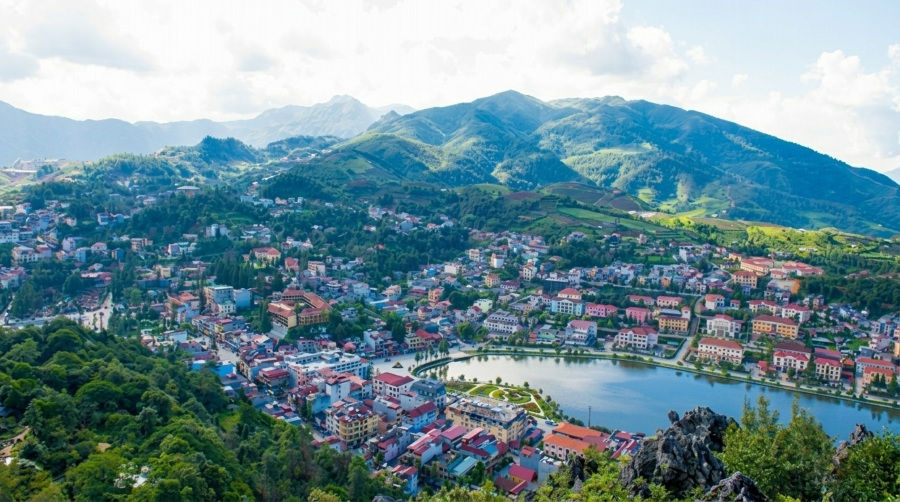
What you get in exchange is the thing nobody puts in the brochures. In July, the average temperature in Sapa is 20.4 °C. In Hanoi, it is 29.9 °C, with the hottest days reaching around 37.5 °C. Sapa is roughly ten degrees cooler than the rest of northern Vietnam in midsummer. That is not a consolation prize - it is the entire reason this town exists. The French built it as a hill station in the 1920s precisely so they could escape the delta heat.
The rice is also at its greenest and fullest, the crowds are thinner, and prices are softer than in autumn.
Here is what the season actually looks like.
How Much Does It Really Rain in Sapa?
A lot. There is no way to soften this.
Month | Rainfall | Rainy days | Average temp | Sunshine |
May | 345 mm | 22 | 19.4 °C | 4.5 h/day |
June | 410 mm | 24 | 20.2 °C | 3.0 h/day |
July | 465 mm | 26 | 20.4 °C | 3.5 h/day |
August | 450 mm | 24 | 20.2 °C | 4.0 h/day |
September | 315 mm | 20 | 18.8 °C | 3.5 h/day |
October | 215 mm | 18 | 16.2 °C | 3.0 h/day |
July is the wettest month of the year at 465 mm across 26 days. For comparison, Hanoi's wettest month is August at 275 mm. Sapa gets close to double the rain of the capital, and the mountains take it harder because the terrain is steep and the water has somewhere to go.
Sapa's annual total is 2,835 mm. June has the least sunshine of any month in the year, at about three hours a day.
But "26 rainy days" is not "26 ruined days"
A rainy day in the climate record is any day with measurable precipitation. That includes a twenty-minute burst at three in the morning.

This matters more in Sapa than most places. A 2025 study of diurnal rainfall across Vietnam found that while southern Vietnam has a consistent afternoon rainfall peak, the far north of the country tends toward nocturnal peaks year-round - rain concentrated in the small hours rather than the afternoon. That is the opposite of the "afternoon showers" line that most Vietnam travel guides repeat, and it is worth knowing: it means fewer whole days are written off than the raw totals suggest.
It does not mean your mornings are guaranteed dry. Dawn after an overnight downpour is often misty with a low cloud base, and Sapa does get multi-day stretches of continuous rain when a weather system parks over the region. But the pattern is bursts and clearances, not a five-day grey drizzle.
The Real Risk Isn't Rain - It's the Road
This is the part most rainy-season guides skip, and it is the one that can actually wreck a trip.
There is no airport in Sapa and no railway. However you arrive, the last stretch is Highway 4D - a mountain road with a steep uphill slope on one side and a drop on the other. In heavy rain, that slope comes down.
How to plan around it:
Don't schedule a Sapa departure on the same day as an international flight out of Hanoi. Leave a full buffer day.
If you have to choose, travel by day. A slide is easier to deal with in daylight.
Check conditions the morning you travel, not the week before.
Keep your accommodation booking flexible if you can.
Our guide to getting from Hanoi to Sapa covers the options in detail.
What Still Works, and What to Skip
Works well in the wet season:
Paragliding. More on this below, but the short version is that it depends on a workable window rather than a dry week.
Fansipan cable car. Runs regardless of rain. The view from the top is a lottery in any season - you are above 3,000 m and often inside a cloud - but the ride itself is worth doing, and it is entirely weather-proof as an activity.
The town, cafés, and markets. Sapa town is compact and has a serious café culture. A wet afternoon here is not a wasted one. See our guide to Sapa's markets.
Valley homestays. Rain on a tin roof over dinner with a H'mong family is, for a lot of people, the memory that survives the trip.
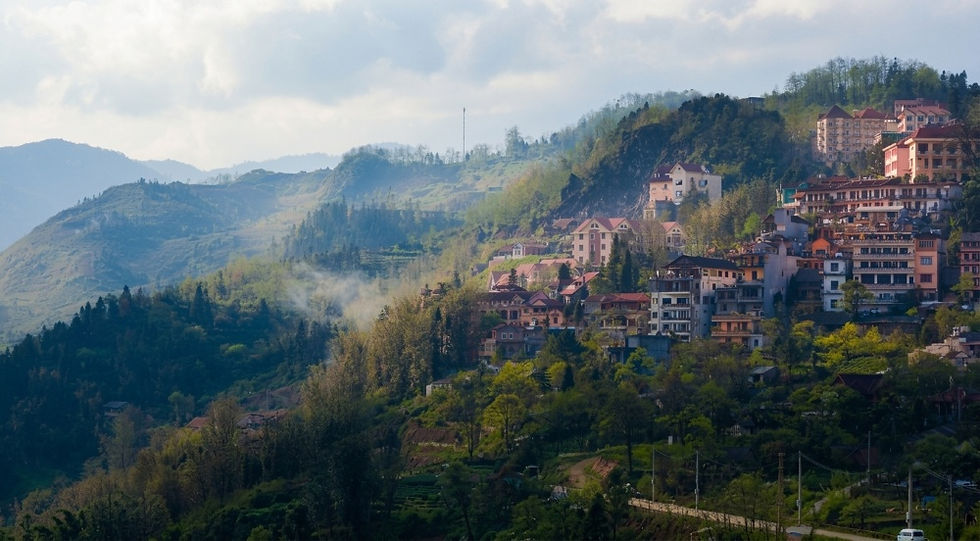
The terraces themselves. July and August are when the rice is fullest and greenest. The golden harvest arrives from mid-August into September.

Compromised or worth skipping:
Long treks. This is the big one. The classic Muong Hoa valley route - Sapa to Y Linh Ho, Lao Chai, and Ta Van, roughly 10–12 km - is not steep, but after rain the paths turn to grease. Shoes with real tread are the difference between a good day and a fall. Read our trekking guide before booking anything.
Motorbiking the passes. O Quy Ho in wet weather with low visibility is not the introduction to Vietnamese mountain riding you want.
Viewpoint photography on a schedule. Some days the valley is simply not there.
Can You Still Go Paragliding in the Rainy Season?
Yes, on most days - but the honest answer needs unpacking.
Nobody flies in rain, in any season. Paragliding is a good-weather sport everywhere in the world. The real question is not "does it rain in July" but "does a workable window open, and what happens to my money if it doesn't."
What we actually need: steady wind from the right direction, a cloud base high enough to clear the launch, decent visibility, and no storms in the area. In the wet season, those conditions come and go rather than settling in for the day. Sometimes we launch on a morning that looked hopeless at breakfast. Sometimes we wait, and sometimes we stand down.
The take-off at Hàm Rồng Mountain sits at 1,750 m, and the landing zone at Tả Van is around 1,000 m - a 750 m drop, the highest commercial site in Vietnam. A high launch is an advantage in a wet season: it gives more margin above a low cloud base than a small hill would.

What happens if we cancel?
This is the part that should decide whether you book. If FlySapa cancels for weather, you get a full refund or a free reschedule, with no fee. That is in writing in our terms and conditions, and we apply it regardless of how far you traveled to get here. If you cancel more than 12 hours ahead, the same applies.
In practice, that means the downside of booking a flight in August is a rearranged morning, not lost money.
Two pieces of practical advice:
Book early in your stay, not on your last morning. If you have three days in Sapa and we can't fly on day one, we have days two and three. If you only have the final morning, we only get one attempt.
Plan for two nights minimum in the wet season. Our two-day Sapa plan is built around exactly this - putting the weather-dependent activity second so there is room to reshuffle.
Before you travel, our live Sapa weather page shows cloud height, visibility, and wind direction for Sapa and Fansipan - the things that actually determine whether we fly, rather than a generic forecast icon.
A tandem flight is 2,390,000 VND (about US$95), including hotel pickup and drop-off, GoPro video and photos, insurance, and a certificate. The whole experience runs 90 to 120 minutes door to door, with 10 to 15 minutes of that in the air.
What to Pack for Sapa in the Rainy Season
A proper rain jacket, not an umbrella. It is windy up here, and umbrellas are useless on a ridge.
Shoes with grip. Not fashion trainers. This is the single most common mistake we see.
A warm layer. 20 °C plus wind plus wet feels a lot colder than 20 °C reads on a forecast. Evenings genuinely need a fleece.
Quick-dry clothing. Cotton stays wet for days at this humidity.
A dry bag or waterproof phone pouch.
If you are flying with us, wear closed-toe shoes, long trousers, and one layer more than you would for walking around town - ideally something windproof.
Month by Month: May to September
May. 345 mm, 22 rainy days. The monsoon has arrived but hasn't peaked. The terraces are being flooded and planted, which is when they look like mirrors from the air. A good compromise month.
June. 410 mm, 24 rainy days, and the least sunshine of the year at around three hours a day. The wettest, grayest stretch. Cheap, quiet, and green.
July. 465 mm, 26 rainy days - the wettest month of the year. Also 20.4 °C while Hanoi sits at 30 °C. Come for the temperature, not the sunshine.
August. 450 mm, 24 rainy days, but rainfall starts easing in the second half, and the rice begins turning gold from mid-month. The best of the wet-season months if you want the harvest color without September's crowds.
September. 315 mm, 20 rainy days - a marked drop. The golden terraces arrive, and this is the month most photographers target. The catch: typhoon season is still fully active, and 2025 showed what that can do to road access.
So Should You Come?
Come in the rainy season if: you want cool weather while the rest of Vietnam bakes, you have at least two or three days in Sapa, and you'd rather have thin crowds and lower prices. You want the terraces at their greenest, and your schedule has some give in it.
Consider another month if: this is a fixed two-day trip with an international flight immediately after, serious trekking is the whole point of your visit, or you need guaranteed clear-weather photographs.
For most travelers already in Vietnam in July or August, the honest answer is that Sapa is one of the better places you can be - as long as you arrive expecting to be flexible.

FAQ
Does it rain all day in Sapa?
Usually not. Rain tends to come in bursts, and research on Vietnam's rainfall patterns suggests the far north peaks overnight rather than in the afternoon. Multi-day continuous rain does happen when a system settles over the region, but it isn't the norm.
Is July or August wetter in Sapa?
July, slightly: 465 mm across 26 days versus 450 mm across 24 days in August. August has more sunshine, and the rice starts turning gold from mid-month, so August is generally the better of the two.
Can I go paragliding in Sapa during the rainy season?
Yes, on most days a workable window opens. We don't fly in rain or low cloud, so flights get delayed or rescheduled more often than in autumn. Book early in your stay rather than on your last morning.
What happens if my flight is cancelled because of weather?
Full refund or free reschedule, with no fee. That applies to any weather or safety cancellation on our side.
Is Highway 4D safe in the rainy season?
It operates normally most of the time, but landslides do close it - several times in 2025, including one full closure on 1 July. Closures are usually cleared within hours. Build a buffer day into your plans and don't schedule a same-day connection to an international flight.
Is Sapa cheaper in the rainy season?
Generally yes. Accommodation is at its cheapest between the spring and autumn peaks, and the town is noticeably quieter.
How cold is Sapa in summer?
It isn't cold, but it is cool: around 20 °C on average in July and August, with highs of about 23 °C. That is roughly ten degrees cooler than Hanoi. Bring a warm layer for the evenings.

Comments