
Sau Chua Village, Sapa – An Untouched Mountain Escape in Northwest Vietnam

While parts of Sapa have become increasingly developed for tourism, Sau Chua Village still feels refreshingly quiet and traditional.
Located at more than 1,700 meters above sea level, the village enjoys cool mountain weather throughout much of the year. It is especially known for cloud hunting, panoramic views, and a slower pace of life - making it a good choice for travelers who want to step away from central Sapa and spend time in a more peaceful mountain setting.

1. How to Get to Sau Chua Village
Sau Chua is around 8–10 km northeast of central Sapa, depending on the route you choose.
The distance is not particularly long, but the mountain roads include steep sections and sharp bends, with impressive views along the way.
Route 1: Via Dien Bien Phu Road and Cau 32
From central Sapa, follow Dien Bien Phu Road in the direction of Lao Cai City.
When you reach Cau 32, turn right and follow the signs toward Sau Chua Village. From there, continue for another 2–4 km depending on where you plan to stop.

Route 2: Via Hang Da Village
From central Sapa, follow Provincial Road 152 for around 2.5 km, then turn left toward the Fly Sapa Paragliding office.
Continue through Hang Da Village toward Sau Chua.
This route is popular with travelers looking for mountain scenery, cloud views, and photo stops along the way.
Choosing Your Transport
Motorbike: Rental prices typically range from 100,000 to 250,000 VND per day. This is best suited to confident riders who are comfortable with steep mountain roads.
Car: A high-clearance vehicle is recommended, and a four-wheel-drive vehicle may be useful if you want to explore more remote parts of the area. This is generally the better option for families, older travellers or anyone who prefers not to ride a motorbike.
Important Road Conditions
The roads into Sau Chua include narrow bends and steep sections.
Drive slowly, use your horn before blind corners, and avoid traveling too late in the evening when mountain fog can significantly reduce visibility.

2. Best Viewpoints and Experiences in Sau Chua
Sau Chua changes dramatically throughout the year, from winter cloud seas to spring flowers and golden rice terraces.
Crocodile Ridge and the Heart-Shaped Rock
Along the paved road into the village, a large rock formation rises near the edge of the valley and is locally known as “Crocodile Ridge.”
From here, you can look across the deep valley toward the Hoang Lien Son mountain range.
Nearby, another natural rock formation resembles a heart, making it a popular sunset photo spot, particularly for couples.
Cloud Hunting in Sau Chua
Sau Chua’s elevation makes it one of the better cloud-hunting areas around Sapa.
Clouds can settle thickly across the surrounding valleys, creating the “sea of clouds” scenery that northern Vietnam is famous for.
The best period is generally October to February.
For more practical tips, see our guide: Cloud Hunting in Sapa: How to Catch the Best Sea of Clouds.

Seasonal Flowers
Sau Chua is also known for colorful flowers at different times of year.
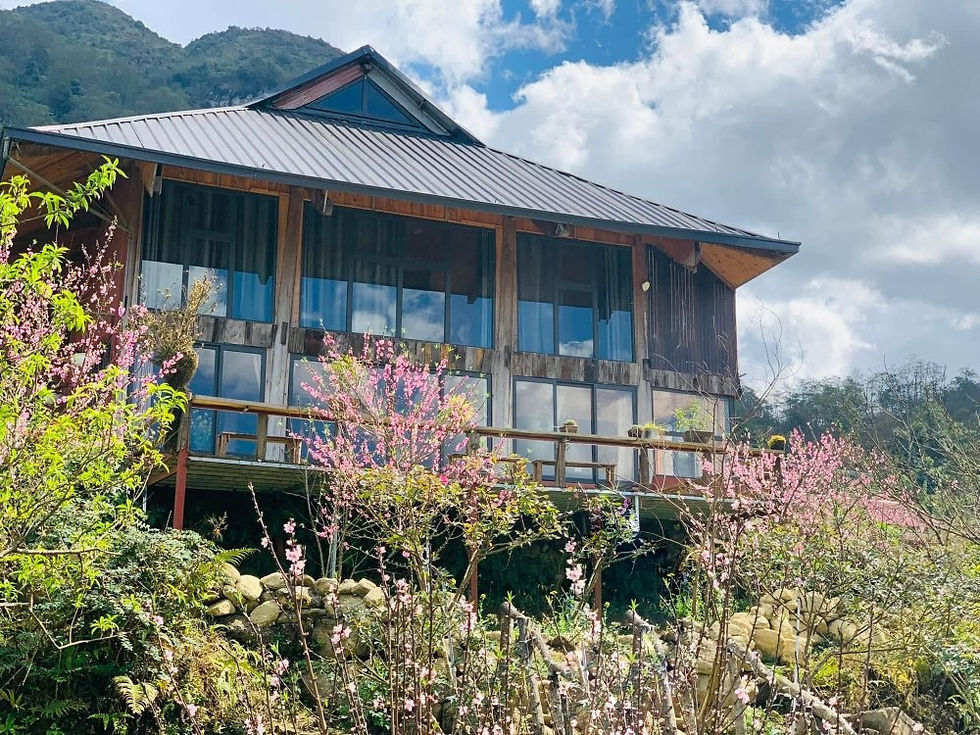
February to April: Peach blossoms, pear blossoms, plum blossoms, and white mustard flowers appear around the village.
April to June and September to October: A large rose garden covering more than 8 hectares features around 415 varieties of heritage and imported roses. Hydrangeas also add color later in the year.
November to December: Yellow mustard flowers spread across the hillsides.

Rice Terraces
The rice terraces give the landscape a completely different appearance depending on the season.
May to June: During the water season, flooded terraces reflect the sky and clouds like a series of mirrors.
September to October: The fields turn golden as the rice ripens, creating one of the most photogenic periods of the year.
3. Discovering Hmong Culture in Sau Chua
One of the main reasons to visit Sau Chua is that it still feels more residential and agricultural than many of Sapa’s busiest tourist villages.
The local Hmong community continues to maintain many traditional aspects of daily life.
Traditional Architecture and Daily Life
Around the village, you can still see traditional houses built with rammed-earth walls, wooden pơ mu roofing, or yin-yang roof tiles, as well as carefully stacked stone fences.
These building techniques help keep homes warmer during cold winters and cooler in summer.
You may also see local women weaving textiles or using plant-based dyes.
Sau Chua’s Kohlrabi Seeds
Sau Chua is also known locally for producing kohlrabi seeds.
According to the local cooperative, the village produces around three tonnes of pure kohlrabi seed each year for distribution around Vietnam.
Seasonal Village Activities
Depending on when you visit, travelers may have opportunities to join or observe activities such as:
rice planting;
red plum picking from May to July;
wild bayberry picking from June to August;
traditional textile work.
Visitors arriving around the beginning of spring may also encounter the Gau Tao Festival, with traditional music, dancing, and community games.
A Quieter Visitor Experience
Sau Chua generally receives fewer tourists than Sapa’s best-known villages.
That makes interactions feel less commercial, and children in the village are less likely to approach visitors to sell souvenirs.

4. What to Eat and Drink in Sau Chua
Food in Sau Chua reflects the mountain cuisine of northwest Vietnam.
Food / Drink | What to Expect |
Sau Chua rice wine | Made from upland rice and traditionally fermented with forest herbs in clay jars for 3–6 months. It has a warming flavor with a slightly sweet finish and is usually around 25–30% alcohol. |
Mountain barbecue | Smoked buffalo, grilled buffalo with honey and mắc mật leaves, roasted local pork and Sapa black chicken prepared over charcoal. |
Local dishes | Thang co, nam pia, men men steamed corn, salmon hotpot, and seasonal mountain vegetables such as chayote, bamboo shoots, and bitter greens. |
Sau Chua rice wine is particularly popular during colder evenings in the village.
5. Suggested 3-Day, 2-Night Sau Chua Itinerary
Day 1: Arrive and Explore the Village
Travel from Sapa town to Sau Chua and check into your homestay.
Spend the afternoon exploring the rose garden and nearby viewpoints, then watch the sunset from the rocks above the valley.
In the evening, try local grilled food and Sau Chua rice wine around the fire.
Day 2: Cloud Hunting, Hmong Culture, and Paragliding
Wake up around 5:00 AM for a chance to see the cloud sea from one of the higher viewpoints.
Later, walk through the village, see traditional rammed-earth houses, and learn more about Hmong textile-making.
In the afternoon, travel around 5 km toward the Fly Sapa take-off area and experience paragliding above Muong Hoa Valley.
Day 3: Slow Morning and Local Shopping
Enjoy a quiet breakfast or coffee overlooking the mountains before returning to Sapa.
Local souvenirs may include handmade textiles, forest honey, herbal rice wine, and kohlrabi seeds.

Where to Stay in Sau Chua
Accommodation in the village is mostly small, simple homestays rather than large hotels.
Examples include:
Sau Chua Mountain View
A House
Sau Chua Highlight
Room prices are typically around 400,000–800,000 VND per night.
Because accommodation options are limited, it is a good idea to contact your chosen homestay before traveling.
Practical Tips Before You Go
Pack for Cold Nights
Temperatures can drop sharply after sunset.
In winter, temperatures may fall below 0°C, and frost can occur, so bring warm clothing, gloves, a hat, and shoes with good grip.
Choose Practical Footwear
Village roads and paths can become slippery, particularly after rain or during misty weather.
Comfortable walking shoes are more useful than fashion footwear.
Respect Local Life
Always ask before photographing residents or entering private spaces.
Sau Chua is a real village rather than an open-air tourist attraction, so treat homes, farmland, and community spaces accordingly.
And, as anywhere in the mountains, take your rubbish with you and avoid damaging fields or vegetation.
Sau Chua is not just a cloud-hunting or photography destination.
Its main appeal is the combination of mountain scenery, traditional Hmong life, and a quieter atmosphere than many of Sapa’s better-known attractions.
If you have enough time to go beyond the town center and want to experience a less developed side of Sapa, Sau Chua is well worth considering.


Comments