
How to Do Sapa's Markets Right: A Level-by-Level Field Guide

Ready to step off the beaten path and discover a more authentic Sapa? Come with us beyond the noisy central market and lose yourself in the highland markets of the Northwest - where the cultural soul of the ethnic communities is kept intact. This is the most complete playbook for a real market-hunting journey.
If what you actually want is a straight comparison - which market is worth the long drive, exact market days, distances - read our companion guide, Which Highland Market Near Sapa Is Worth the Trip? This article assumes you're going and focuses on how to do it well.
🥉 Level 1: Sapa Town Market - A "Symphony of Color" for Beginners
If you're just starting out, the town market (often called the San Sapa H'mong market) is a must. Right in central Sapa, next to the Stone Church, it's superbly located and easy to reach on foot. Unlike markets that meet only one day a week, this one runs every day - but it's busiest and most lively on Saturday mornings, when the main session takes place.

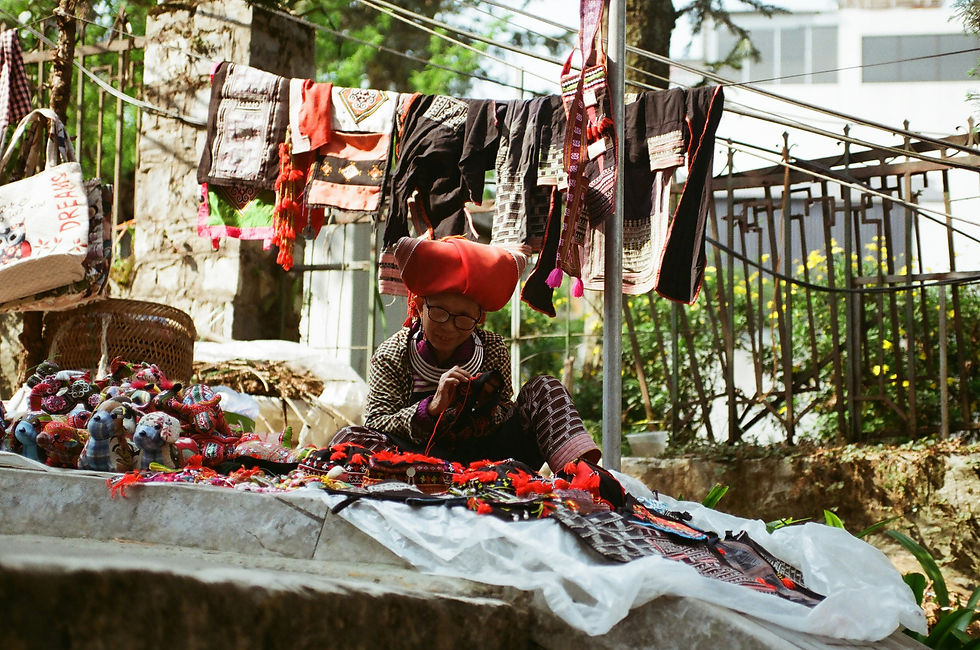
The standout goods here are a miniature world of highland culture: the colorful brocade costumes of the H'Mong and Red Dao, hemp fabrics, handmade bags and wallets, and finely crafted silver jewelry. One obvious drawback, though: because this market serves tourists, prices are usually quoted higher than at local markets, so bargain - skillfully and cheerfully.
Don't leave without trying the mountain flavors at the market's food area. Thắng cố (a stew of horse or beef), fragrant grilled "armpit pig," and chewy five-color sticky rice are top picks. A special tip from Fly Sapa: go very early - not just to beat the crowds, but to witness the moment ethnic families carry their goods down to market through the morning mist, the most authentic and beautiful sight of all.
📘 A Few Tips for Sapa Town Market:
The "3-of-7" bargaining tactic: The opening price is often 2–3× the real price. Counter at a third or half of what they quote and negotiate slowly. Always smile and stay good-natured.
Watch for pickpockets: This is one of the most crowded spots in Sapa. Wear your bag/backpack on your front, and never keep your wallet in a back pocket. For women, a cross-body bag held in front is safest.
Cash is KING: Most stalls don't accept cards or bank transfers. Withdraw enough cash and split it across a few places. Skip a bulky wallet - use a small one that's easy to pull change from. Keep plenty of small notes (10k, 20k, 50k) for easy buying and bargaining.
"Window-shop" before you buy: Walk the whole market to compare styles and prices before committing. The same item can cost different amounts at different stalls. For something you like, ask the price at at least 3 stalls first to get a true feel for the going rate.
Eating - look closely, ask clearly: At the food area, pick the busy stalls and ASK THE PRICE BEFORE YOU ORDER. Especially for specialties like thắng cố, ask clearly whether the price is per bowl or per pot.
🥈Level 2: Cát Cát & Tả Phìn Markets - The Doorway Into the Real World
Once you've found your feet, go a little further to discover markets woven into village life.
Cát Cát Market
This market sits inside Cát Cát Village (San Sả Hồ commune, about 2 km from central Sapa). It runs daily but has a more local feel. The most common way in is to rent a motorbike or walk down to the village. Prices here are a bit softer than in the town market. Brocade and handicrafts still dominate, but you'll also find many "antique" items and pure silver bracelets at good prices.

📘 Tip: Combine the market with exploring Cát Cát Village - the waterfall and the traditional weaving craft. And don't miss San Lùng wine, a fragrant local corn liquor.

Tả Phìn Market
This market is in Tả Phìn Village (about 12 km east of central Sapa) and usually meets on Sunday mornings. You can easily get there by motorbike. It's a paradise for lovers of Red Dao costume - you'll be swept up in a sea of brilliant red clothing with intricate hand embroidery. Prices are very reasonable, and there's little price-gouging.
Once here, be bold: strike up a conversation and buy small items like herb-seed pouches or hairpins. And be sure to try mèn mén (steamed corn meal), a staple of local life. You're not just shopping - you're stepping into people's real living space, watching them weave cloth and distill wine.

✨ Field-Tested Tips for Travelers:
Non-slip sports shoes are a must: The path down to Cát Cát is stone steps that can get slippery. Absolutely no flip-flops or sandals.
Portrait photos - ask first: People here are very friendly but don't like being photographed without permission. Make eye contact, smile, and gesture with your camera. If they nod, take the shot and don't forget to say thank you. A small pack of sweets or a little money (10k–20k) as a thank-you is a nice gesture.
Carry very small change: For roadside snacks, drinks, or to "tip" an elder or child if you photograph them.
Try San Lùng wine "with a plan": It's tasty but fairly strong. If you can't drink much, say "I'll just try a little" to avoid a full pour. Sip slowly to savor the flavor.
🥇 Level 3: Hunting the "Secret" Markets That Meet Only Once a Week
This is the heart of the journey, for those craving the most authentic experience of all.
Bac Ha Market - "A Photographer's Paradise"
About 100 km from Sapa, in the center of Bac Ha town, Lào Cai province, Bac Ha Market is unmissable for lovers of photography and local culture. It meets only on Sunday mornings, so plan carefully.
From Sapa, the drive takes around 2.5–3 hours along winding mountain passes. For safety and comfort, the best option is to hire a private car with a local driver. The ideal plan is to leave Sapa at 5 AM to reach the market around 7:30–8:00 AM, in time for the earliest session - when the air is still cool, the light is perfect for photos, and the horse and cattle market is at its liveliest. This is also the moment to take in the vivid colors of the Flower Hmong costumes and to buy the best raw hemp and brocade.
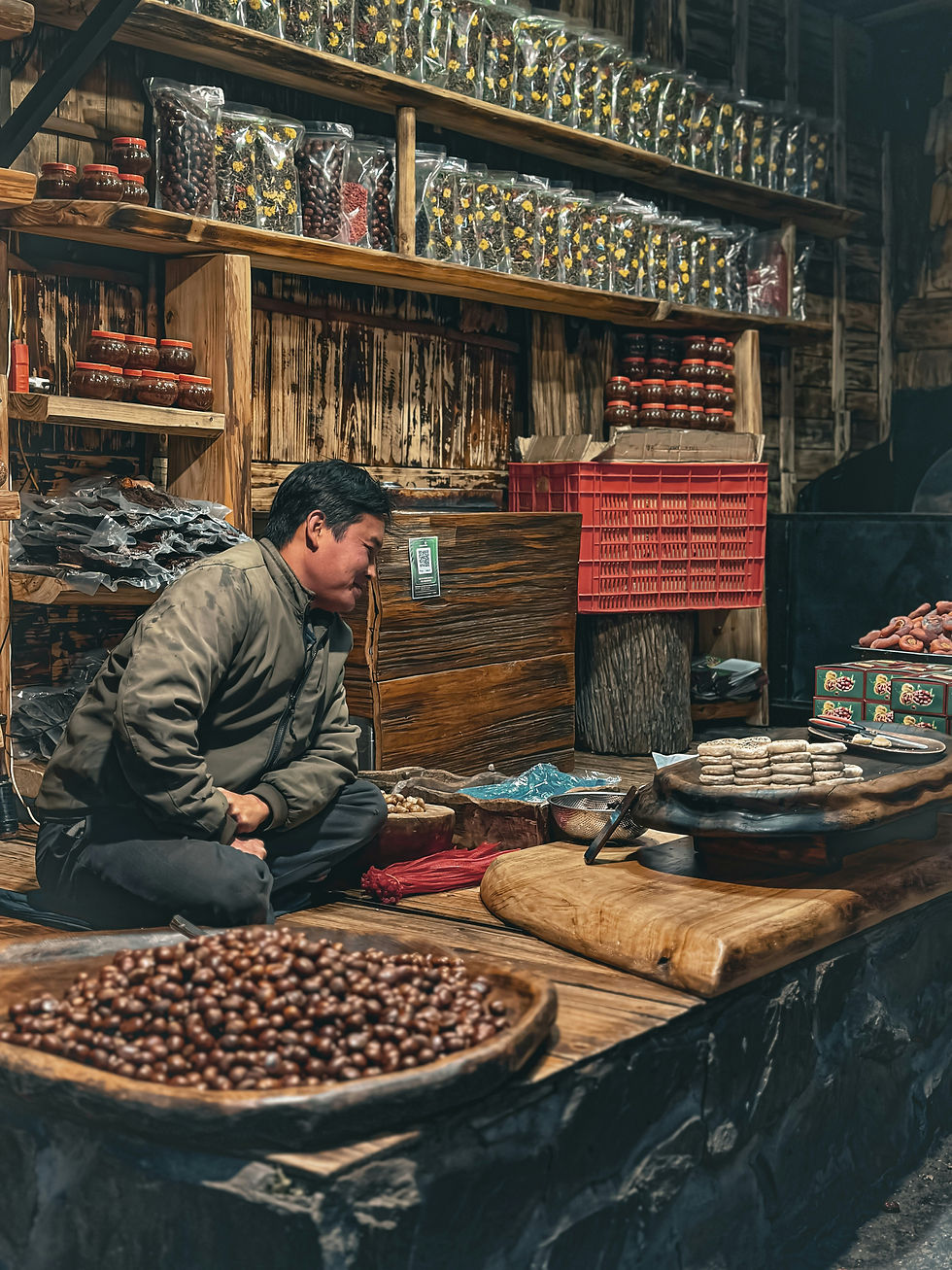
The unmissable highlight is the bustling horse and cattle market and the brilliant Flower Hmong dress. Prices are genuine - this is the place to buy the highest-quality raw hemp cloth and Hmong brocade. Try Bac Ha corn wine and horse thắng cố right there at the market to round out the experience.

Can Cau Market - The Legendary "Love Market"
In Can Cau commune, Si Ma Cai district (about 80 km from Sapa), this market meets on Saturday mornings right beside an old stone bridge over a stream, creating a wonderfully poetic scene. Traveling by motorbike is ideal for taking in the majestic mountain scenery along the way. The market is famous as a "love market" where couples once came to find each other. Goods are mainly local produce and household items. Arrive early, listen to the Hmong khèn pipe, and soak up the fresh, barely touristed atmosphere.

Muong Hum Market - A Rough Gem in a Bowl of Cloud: In Bát Xát district, about 50 km from Sapa, this market meets on Sunday mornings. With the shorter distance, you can leave at 6 a.m. and still catch the early session. You can travel by motorbike. Tucked deep in a valley, it's a cultural crossroads of the Giáy, Tày and Dao peoples. It has a wild, untouched beauty, and because the goods mostly serve local life, prices are very cheap. Try phở chua (sour pho), a unique highland twist on the dish.

The feeling is of "stepping into another world" - where pure local culture overwhelms tourism. At these markets you really are the stranger, and everything around you is real life.
📘 Field-Tested Tips for Travelers:
Hire a reputable motorbike/motorbike taxi: For the distant markets, rent a motorbike from a trusted hotel/shop and check the brakes, tires and fuel/oil carefully. If taking a motorbike taxi, negotiate the price and timing TIGHTLY before setting off - including how long the driver will wait for you at the market.
Go extremely EARLY: Leave at 4–5 a.m. to catch the earliest, most beautiful - and least dusty - session. Early light is also "gold" for photography.
Photographing the livestock market - keep a safe distance: The buffalo, cattle and horse areas are well worth seeing but carry some risk. Watch from a distance, don't approach or touch an animal without the owner's consent. Your feet may get muddy, so wear boots or old shoes.
Eat a little "adventurously," but be selective: Thắng cố here is the most "authentic," but its distinctive flavor isn't for everyone. If your stomach is sensitive, have sticky rice or bamboo rice for breakfast to be safe. Drink only bottled water.
Respect above all: You're a guest in their cultural space. Don't point, laugh, or be loudly mocking about customs or clothing. Respectful behavior will open valuable doors to connection.
A Note on the "Sapa Love Market"
You may have heard the phrase "Sapa Love Market." In truth, the most authentic love-market tradition belongs to Bac Ha and Can Cau. These days, the Sapa town market (especially the area around the Stone Church on Saturday evenings) is also promoted as hosting performances and "love market"-style meet-ups for tourists. But to find the real atmosphere of young people courting through the sounds of the khèn and flute, Bac Ha and Can Cau are the genuine article.
🎯 Keys to a Successful Market Hunt
Know the market schedule. This is the single most important factor:
Sapa Market: busiest and best on Saturday mornings.
Bac Ha, Muong Hum: Sunday.
Can Cau: Saturday.
The ideal hunting schedule: For distant markets, leaving at 4:30–5:00 AM is the golden window - you catch the earliest, most beautiful session with perfect morning light and beat the tour groups arriving later.
Transport: Renting a motorbike is the most flexible way to reach the far markets. For a group, hire a car with a driver. For distant markets, rent your bike/motorbike taxi from a reputable hotel and negotiate price and timing TIGHTLY before leaving.
Behave respectfully: Always ask (with your eyes or a gesture) before taking portraits. Respect earns you the best photos and the friendliest smiles.
What to eat at a market? Don't hesitate to try:
Thắng cố: the iconic dish.
Bamboo rice and grilled pork: rich mountain flavors.
Táo mèo wine: the signature drink that warms you up.
Eat selectively: Favor hot food and bottled water. If your stomach is sensitive, have sticky rice or bamboo rice for breakfast.
Exploring the highland markets of the Northwest really is a captivating cultural adventure. Don't stop at Level 1 - be bold and head beyond Sapa town to hunt down the authentic, vivid, deeply moving moments of the markets that meet just once a week. The memories of those trips will be the most precious thing you carry home from the Northwest.


Comments