
Sapa Travel Guide 2026: Everything You Need to Plan Your Trip

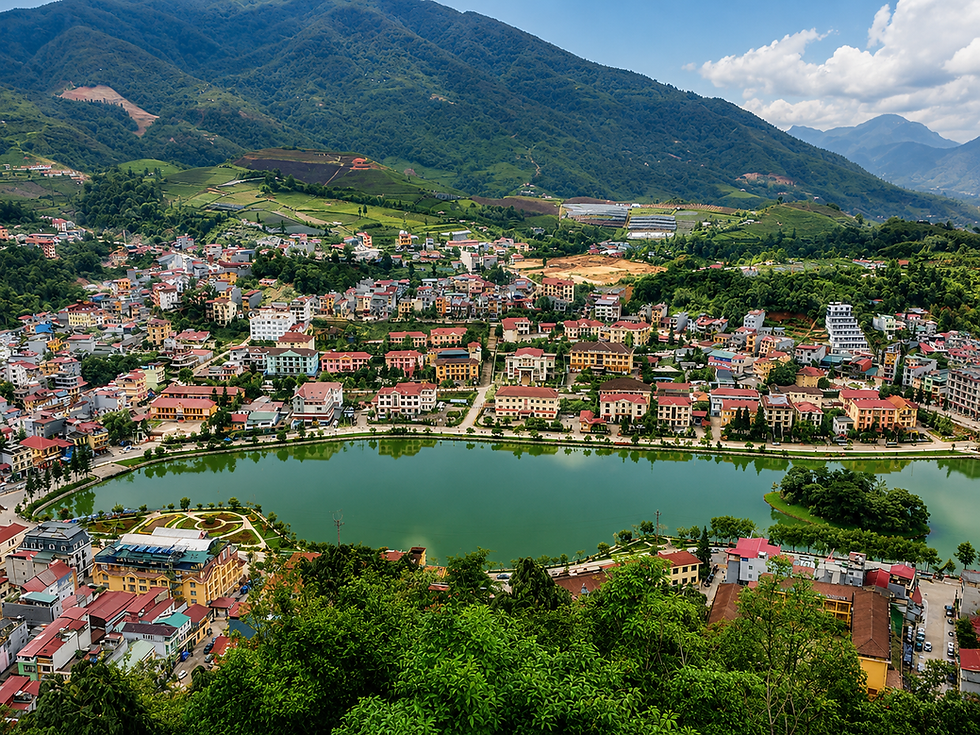
Sapa is northern Vietnam's mountain town: 1,500 m up, wrapped around the Muong Hoa Valley's rice terraces, with Fansipan - Indochina's highest peak - filling the horizon.

Two full days cover the essentials; September to November is the season to aim for, and getting here from Hanoi takes about 5.5 hours by road. That's the guide in three sentences; everything below is the detail, from a team that lives and flies here year-round.
In This Guide
Is Sapa Worth Visiting?
Yes - with one honest caveat. The reason to come is the landscape: a vast valley of stepped rice terraces, villages of the Hmong, Giay, Dao, and Tay people, cloud inversions that fill the valley like a white sea, and the 3,143 m bulk of Fansipan above it all. No photo does the scale justice; we look at it from 700 m up every day, and it still works on us.

The caveat: Sapa town itself is busy, built-up, and commercial - hotels, karaoke, construction. Travelers who expect a sleepy mountain village are surprised. Treat the town as your base and the valley as the destination, and you'll leave understanding why people keep coming back. If your time is tight, our guide to things to do in Sapa and how to choose between them sorts the essentials from the fillers.
When to Visit Sapa
Months | What You Get | Verdict |
Sep–Nov | Golden rice terraces (Sep), clear skies, stable weather, best flying conditions | Best overall - book ahead |
Mar–May | Mild, green, water-mirror terraces in May, fewer crowds | Strong second choice |
Jun–Aug | Monsoon - lush and dramatic, but July averages ~23 rainy days | Doable, plan around rain |
Dec–Feb | Cold (down to 0°C), heavy fog, occasional frost - and the fewest tourists | Atmospheric, pack warm |
One planning note: the rice harvest usually peaks mid-to-late September. If golden terraces are the whole point of your trip, target the first three weeks of September and have a flexible day or two - the exact timing shifts each year with the weather.
How to Get to Sapa From Hanoi
The short version: there's no airport and no direct train - the railway ends in Lao Cai, 35 km down the mountain.
Nearly everyone takes the road: a limousine van (about 5.5 hours, 320,000–660,000 VND, hotel-to-hotel) is the default choice, a sleeper bus (230,000–450,000 VND) is the budget move, and the night train (8–9 hours door to door with the Lao Cai transfer) is for people who love trains more than sleep.

The full comparison, timings, and booking tips are in our Hanoi to Sapa guide.
How Many Days Do You Need?
Two full days is the honest answer for the essentials: one day trekking through the valley villages, one day for Fansipan or a big activity.
Three days lets you slow down, add a homestay night in the valley, and stop rushing between things.
A day trip from Hanoi technically exists, and we'd talk you out of it - 11 hours of driving for 4 hours of Sapa is a bad trade.
Our two-day Sapa plan without rushing lays out the exact itinerary we recommend to guests.
Where to Stay: Town or Valley
Two real options. Sapa town: every price range, restaurants, and logistics on your doorstep, but noise and construction come free. A valley homestay (Ta Van, Lao Chai, Hau Thao): rice terraces at sunrise, family dinners, roosters at 5 am - the version of Sapa people fall in love with.

The move that works for most trips: base in town, spend one night in the valley. We wrote a full local's guide to Ta Van village, where our paragliders land every day.
What to Actually Do in Sapa
Trek the Muong Hoa Valley. The signature Sapa experience: half a day or a full day through terraces and villages, with or without a guide.
Routes and difficulty levels are in where to trek in Sapa and how hard it really is.
Go up Fansipan. The cable car makes Indochina's highest peak a halfday trip - spectacular on a clear day, pointless in fog. Check the summit webcam or ask your hotel before committing the morning.
See the valley from the sky. Our obvious bias, openly declared: tandem paragliding from Ham Rong Mountain (1,750 m) is the single best view of everything this guide describes - 750 m of descent over the terraces, $95 all-inclusive with GoPro footage.
If running off a mountain isn't your thing, the paramotor trike takes off seated from the valley floor.
Walk the town's free viewpoints. An easy half-day loop - covered in five free things to do on a walk around Sapa town, including Ham Rong Mountain, the big view you can reach on foot.
Ride the alpine coaster. A fun hour with valley views - our honest review covers prices and whether it's worth it.
Catch a highland market. The real ones happen on specific days outside town - which market is worth the trip depends on your day of the week.
Drive the O Quy Ho Pass. One of Vietnam's four great passes, right out of town - guide here. Renting a motorbike? Read the license and police reality first - it's stricter than travel forums suggest.
What a Sapa Trip Costs in 2026
Item | Typical Cost (VND) | USD |
Hanoi → Sapa (limousine van, one way) | 320,000–660,000 | $12–25 |
Hotel night (mid-range, town) | 1,200,000–1,900,000 | $45–75 |
Homestay night (valley, with dinner) | 250,000–1,000,000 | $10–40 |
Meal (local restaurant) | 40,000–120,000 | $2–5 |
Muong Hoa Valley entrance | 150,000 | ~$6 |
Fansipan cable car (return) | 850,000-900,000 | $33–35 |
Alpine coaster | 200,000–250,000 | $8–10 |
Tandem paragliding (all-inclusive) | 2,390,000 | $95 |
Day trek with local guide | 500,000–1,200,000 | $20–46 |
Rule of thumb: a budget traveler manages on $30–50 a day for bed, food, and local transport; the memorable extras (Fansipan, flying) sit on top of that. Bring cash - cards work in hotels and bigger restaurants, but villages, markets, and taxis run on cash.
Practical Tips Nobody Tells You
The weather changes by the hour, not the day. A foggy 8 am means nothing about noon. Build slack into plans that need clear skies (Fansipan, flying) - and check with locals, not just the app.
Buy a SIM/eSIM in Hanoi. You'll need data for pickups, maps, and rescheduling long before you need it for Instagram.
Dress one layer warmer than the forecast suggests - town sits at 1,500 m. Full seasonal advice: what to wear in Sapa.
Ask before photographing people, especially children and anyone in traditional dress. A smile and a gesture at the camera does it.
Keep valley tickets. The Muong Hoa checkpoint receipt can be checked again further down the valley.
Book weekends ahead. Domestic tourism fills Sapa on Fri–Sun; midweek is calmer and cheaper.
Planning around the golden season? September–November is also prime flying weather. Check flight dates early - autumn slots fill fastest, and the view of gold terraces from 700 m up is the single best photo your trip will produce. |
FAQ
Is Sapa worth visiting?
Yes - for the valley, villages, Fansipan, and the flying. The town is the base, not the attraction.
How many days?
Two full days for the essentials; three if you want a homestay night and a slower pace.
Best time to go?
September–November. March–May second. July is the wettest month of the year.
How do I get there from Hanoi?
Limousine van (~5.5 h) or sleeper bus by road; night train to Lao Cai + 1 h transfer. No airport.
Daily budget?
$30–50 covers bed, food, and transport; big experiences (cable car, paragliding) are on top.


Comments